

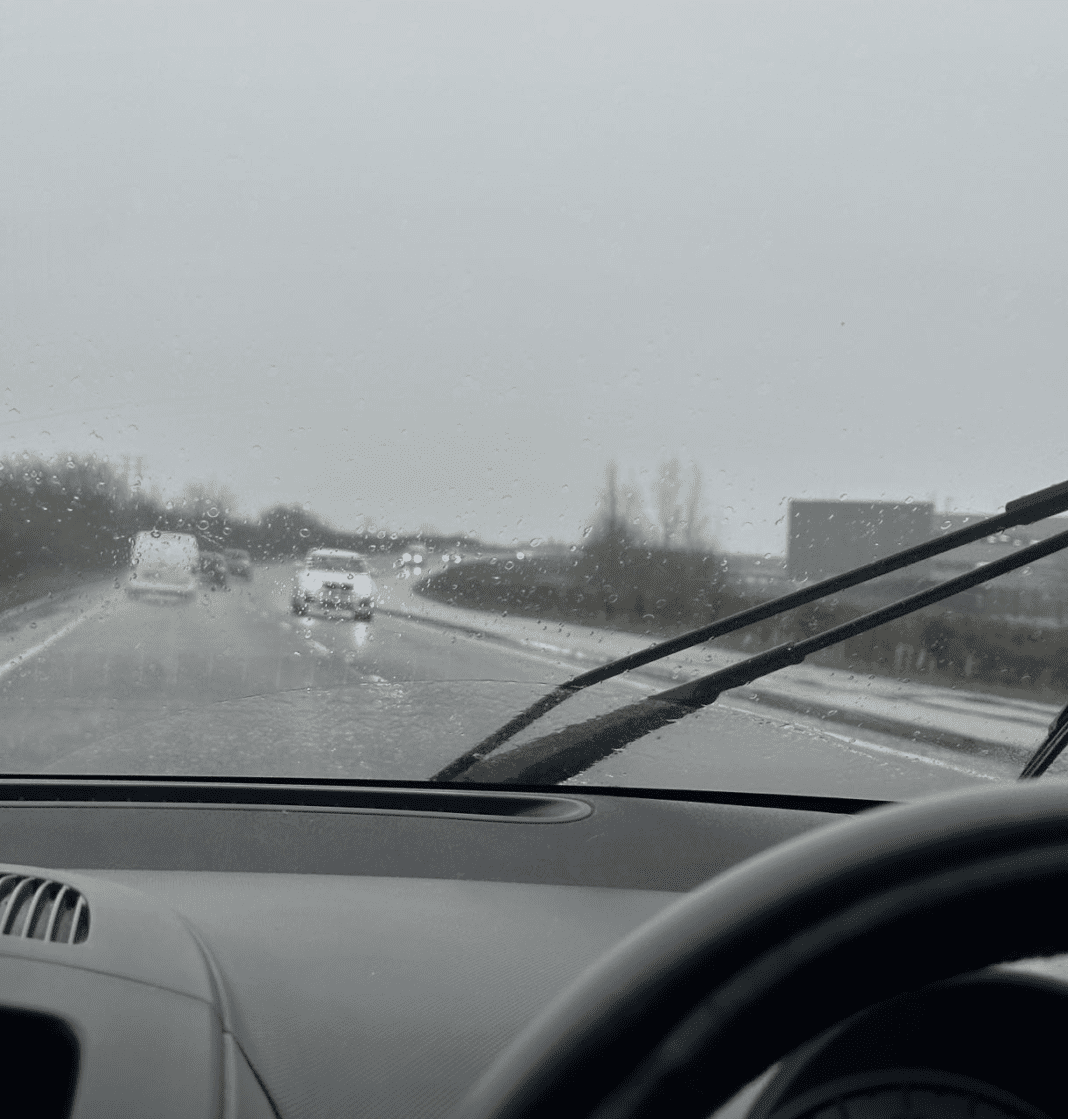
Driving in the rain requires sensible speed, good and well kept tyres, and lots of distance between you and anyone else. That alone would avoid most crashes that happen in the wet, but there are a few things you should know to keep you on the tarmac facing the right way. My favourite way to learn about driving in the rain, is to go Go-Karting at your local track in the rain, on slicks. But if you don’t want to get sopping wet at a Kart track, here are some tips for you.
Speed is the enemy here, boring I know
Driving on the road in the rain it can be tempting to speed past people in lane 3 of the M1, but it can end up with you in the highway barrier surprisingly quickly. Aquaplane risk is dependant on the quality of your tyre (and how it was constructed), and grows exponentially with speed. If you feel even slightly out of control in the rain, drop the speed down until the car feels settled again. It’s not worth risking it.
A quality tyre built for driving in the rain
Tyres (or tires for the Americans) are not built equal. On most manufacturer websites, and tyre sale sites (like Blackcircles), there will be a “rain rating” on each tyre. An “A” rated tyre will come to a stop approximately 18 metres earlier than an “E” rated tyre. It’s not always just about more expensive being better either, so do your research, and if you drive in the rain a lot, stay off the semi-slick track tyres, and aim towards the Michelin Pilot Sports, or the Uniroyal Rainsports of the world
Tyre pressures are important
Make sure your tyre pressures are matching what your handbook recommends for your model of car (you can often find this on the door sill too). Too high of a pressure can do strange things to a cars handling, but too low of a tyre pressure is something that’s more of a worry. Low pressure sagging tyres won’t cut through water as easily and allow the treads to work as well. This can make them slower to react, and more likely to aquaplane in less water than usual.
Know all the ways aquaplaning might get you
Aquaplaning in a car can come at you in multiple forms. From splashing through a massive puddle at high speeds, to a motorway with subtly increasingly waterlogged lanes over time. Big puddles are obvious, you don’t want to drive through them at 100mph.
Subtly waterlogged highways can be subtly dangerous though. If it feels like your car is darting slightly left or right on the motorway, it might be time to bring the speed down, and check your tyres. Aquaplaning will affect braking distances too.
” road users are 30 times more likely to be killed or seriously injured in rain than in snow.” – Highways England
Double the distance you’d normally keep between you and the car in front
The highway code in the UK suggests that the average stopping distance from 70MPH is 96 metres (316 feet), and that this at least doubles in the wet, or multiplies by ten in icy coniditions. You need more time to think first, and then brake, especially when in adverse conditions, where visibility may be reduced too. Give yourself the best chance to keep your insurance NCB, and your car (and body) intact.
Get to your local skid pan
Not only is it hilarious fun to slide around in a variety of cars (my favourite is Drift Limits in Hemel Hempstead), but skid pans teach you how to drive by “the seat of your pants”, safely introduce you to understeer vs oversteer, and let you experience a car on the limit before you experience it by accident out on the public roads.
The idea that the first time the public experience a car at its limit is just before they have a crash is a scary one, it would be good to not let that be you.
Reduced grip applies not just in braking, but in the corners too
If your braking distance is doubled, then the amount of speed you can carry through a corner will be halved too. You’re much more likely to experience understeer, and oversteer, and have to deal with them accordingly (we have several videos and articles on that!).
A much easier way to deal with an upset car, is to just not upset it in the first place, by dropping the speed down. Keep your oversteering the track if you can, it’s much more fun.
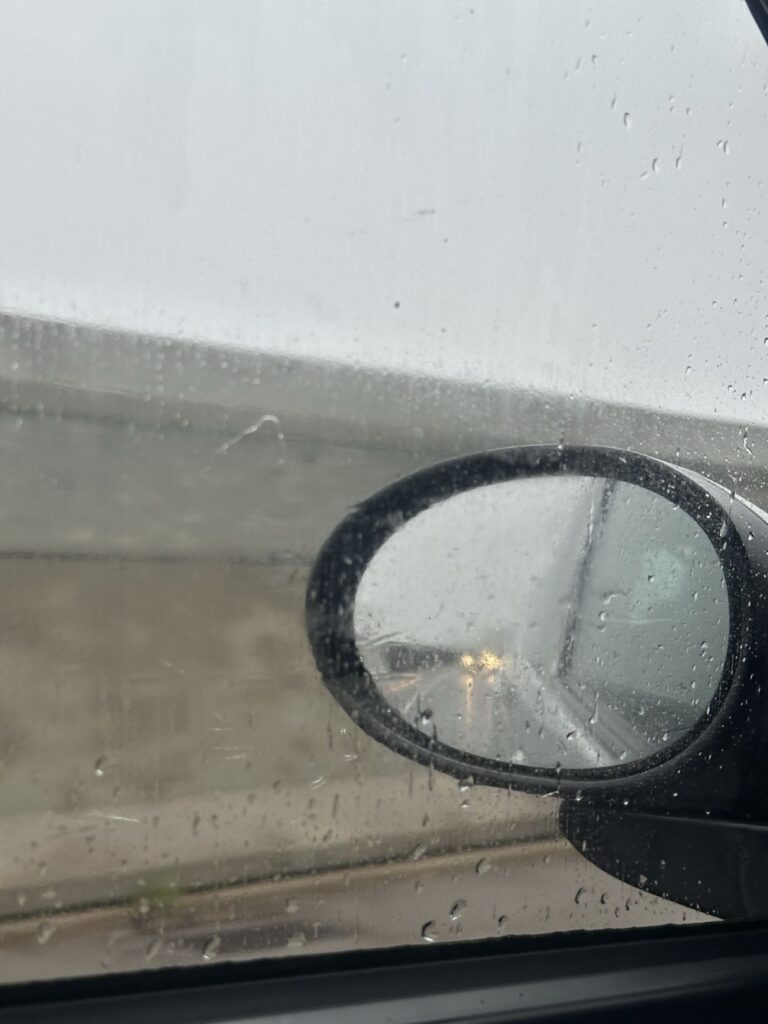
When you see your window start to fog up, and headlights start to come on with other cars, definitely have a think about increasing the gap between you and the cars around you when possible.
The less you can see, the more distance you need between you and any other car
You’ll be starting to see a theme here. Visibility whilst driving in the rain can be changed by how heavily it’s raining, your car fogging up unexpectantly, the condition of your windscreen wipers, and how clean your windows are.
Give everyone more time, and space to get on with their own driving, and yourself to react to anything that might happen. You just have to watch a few driving dashcam crash videos to see the crazy things that people will do in normal conditions, let alone the rain.
Rear wheel drive is not the evil in the wet that people make it out to be
Whenever there’s a car crash in the rain, there’s a lot of blaming going on about RWD (rear wheel drive) cars, especially the BMWs and Mercedes of the world. Yes, at their limit, RWD cars need more finesse to drive properly in wet conditions, but at sensible speeds, and maintained well, there’s no reason that they should be any more difficult or dangerous than any other car.
If you’re tailgating, driving too fast for the conditions, on dodgy old and crusty tyres, then they can definitely become a problem. FWD (front wheel drive) cars that the public are mainly used to are very good at masking light aquaplaning, and are more forgiving to drivers who just “put their foot down”. A powerful BMW, or Mercedes in RWD form won’t forgive you as quickly, or stay in a straight line without due care.
Driving in the rain never has to be scary, even though it can be intimidating, especially when you’re a newer driver. Driving in the rain can actually be a fun experience when you relax into it, and trust in your own abilities. If you want more rain driving tips, check out our other articles, or head on over to the YouTube channel.

